Best Writing Skills for Career Success: Complete Guide 2025


Writing skills refer to your ability to express thoughts, ideas, and information clearly and effectively through the written word. They cover a wide range of abilities, from grammar, spelling, and punctuation to structure, tone, coherence, and vocabulary use.
Nowadays, your ability to communicate clearly in writing has a direct impact on your career trajectory, salary potential, and professional reputation. Follow this guide we created to get more familiar with the most sought-after types of such skills and discover how to properly showcase them on a resume.
- Writing skills are essential for professional success across all industries, as they help you communicate with others.
- Different types of writing skills serve various workplace purposes, from technical documentation to persuasive proposals.
- These abilities can be developed and improved through practice, making them accessible to anyone willing to invest time and effort.
- Showcasing writing skills on your resume increases job prospects by demonstrating your communication competency to potential employers.
What Are Writing Skills?
Writing skills represent the ability to communicate effectively through written words, and they encompass much more than just grammar and spelling. These competencies include clarity of thought, logical organization, appropriate tone selection, and purposeful messaging that connects with your intended audience.
Professional writing competency goes beyond basic literacy. It involves understanding your audience's needs, structuring information logically, and choosing words that convey precise meaning while maintaining engagement. Additionally, strong writing skills include the ability to adapt your voice and style depending on the context.
The foundation of good writing rests on several pillars:
- Grammar and mechanics provide structural integrity.
- Clarity and conciseness ensure your message gets through without confusion.
- Organization and flow guide readers through your thoughts naturally.
- Audience awareness helps you calibrate your tone and complexity level appropriately.
Why Writing Skills Matter in the Workplace
Writing skills matter because modern businesses run on written communication. Every day, millions of emails zip across corporate networks, reports get generated and shared, proposals compete for approval, and teams collaborate through written messages. So, logically, poor writing costs companies significant money through miscommunication, project delays, and lost opportunities.
This type of communication has become even more critical as remote work and digital collaboration have exploded. When you can't walk over to someone's desk to clarify a point, your written words must do all the heavy lifting. Therefore, clear, well-structured written communication reduces back-and-forth confusion, speeds up decision-making, and builds professional credibility.
Above all, companies value employees who can articulate complex ideas simply, write compelling reports, and represent the organization professionally in all written communications.
Impact on Career Advancement
Strong writers climb the career ladder faster than their peers, and professionals who demonstrate excellent written communication skills are more likely to receive promotions at work.
Additionally, leadership positions require the ability to communicate vision, provide clear direction, and influence others, which are the skills that translate directly from strong writing abilities. When executives need to choose between candidates for management roles, they consistently favor those who can write clearly and professionally.
Higher salaries often follow superior writing skills, too; the ability to craft compelling proposals, write detailed reports, and communicate effectively with clients makes you more valuable to your organization.
Digital Communication Demands
The digital workplace has transformed how we communicate and made writing skills more crucial than ever. Remote teams rely entirely on written messages through platforms like Slack, Microsoft Teams, and email to coordinate work, share updates, and make decisions.
Furthermore, social media presence has become part of many professionals' responsibilities, requiring the ability to write engaging, on-brand content across different platforms. Therefore, LinkedIn posts, Twitter updates, and company blog articles all demand strong writing skills that reflect well on both you and your employer.
Finally, online collaboration tools like project management systems, shared documents, and digital whiteboards require clear, concise written input to function effectively. Your ability to communicate through these platforms directly impacts team productivity and project success.
15 Essential Writing Skills Every Professional Needs
Now that we know why writing skills matter, let’s see which ones are the most sought-after on the market:
Grammar isn't just about following rules; it's about ensuring your message reaches your reader without distractions or confusion. What’s more, it’s safe to say that proper grammar, punctuation, and spelling create the foundation for professional credibility and clear communication.
Grammatical mistakes can derail your message and make you appear less competent, regardless of how brilliant your ideas might be. This is because misplaced apostrophes, subject-verb disagreement, and run-on sentences force readers to work harder to understand your meaning.
Modern tools like Grammarly and Microsoft Editor help catch basic errors, but understanding fundamental grammar principles makes you a more confident and effective writer. Therefore, you should focus on mastering sentence structure, proper punctuation usage, and consistent verb tenses.
These skills become especially important when writing formal reports and professional proposals, where errors could cost you credibility or business opportunities.
Brevity is brilliance in business writing; your readers are busy, and they appreciate writers who respect their time by getting straight to the point without unnecessary fluff or complicated jargon.
Clear communication skills entail understanding exactly what you want to say before you start writing. Take time to organize your thoughts, identify your main message, and structure supporting details logically. Plus, make sure you use simple, direct language instead of complex phrases that might confuse or alienate your readers.
Besides that, conciseness doesn't mean being abrupt or rude but choosing your words carefully and eliminating unnecessary elements. Your readers will appreciate your respect for their time, and your messages will have a greater impact when they're focused and streamlined.
Understanding your audience is perhaps the most critical writing skill you can develop. The same information needs to be presented differently depending on whether you're writing for your CEO, your team members, or external clients.
Audience awareness involves considering your readers' knowledge level, interests, concerns, and communication preferences. For example, a technical report for engineers should include detailed specifications and industry terminology, while a summary for executives should focus on business impact and strategic implications.
Consider what your audience already knows about the topic, what they need to learn, and what action you want them to take. This analysis guides every writing decision, from word choice and tone to document structure and length, and developing strong communication skills includes mastering this adaptability.
Well-organized writing guides readers smoothly from introduction to conclusion, making complex information digestible and memorable. Strong structure isn't just about following traditional formats but about creating a logical flow that supports your message.
Start with a clear introduction that previews what's coming, organize body content in logical sequence, and conclude with a summary or call to action. Use headings, bullet points, and white space strategically to break up text and make information easy to scan.
Additionally, consider using proven organizational patterns, such as chronological order for processes, problem-solution structure for proposals, or the compare-and-contrast format for decision-making documents. Your choice of organizational structure should always serve your readers' needs and your communication goals.
Credible writing requires accurate information, proper research methodology, and reliable sources. With so much information overload and fake news nowadays, your ability to find, verify, and cite trustworthy sources can set your work apart.
It’s best to develop skills in database searching, evaluating source credibility, and cross-referencing information from multiple sources. Learn to distinguish between primary and secondary sources, and understand when each type is most appropriate for your writing purposes.
Also, fact-checking isn't just for journalists; business writers need to verify statistics, quotes, industry trends, and technical specifications before including them in reports or presentations. Inaccurate information can damage your professional reputation and your organization's credibility, while well-researched content builds trust and authority.
Email is one of the pillars of business communication, which makes professional email writing skills absolutely essential for career success.
Effective email writing involves clear subject lines, appropriate greetings, organized body content, and professional closings. Subject lines should be specific and informative, giving recipients a clear indication of the email's content and urgency level. Use action-oriented language when appropriate, such as "Action Required: Budget Approval by Friday" or "FYI: New Client Onboarding Process."
Email communication tone requires careful calibration, which needs to be friendly enough to maintain relationships, professional enough to maintain credibility, and clear enough to prevent misunderstandings. Keep emails focused on a single topic when possible, and use bullet points or numbered lists to organize multiple pieces of information clearly.
Business reports serve as decision-making tools, requiring writers to present complex information in accessible, actionable formats. Effective report writing combines analytical thinking with clear communication to help readers understand situations and make informed choices.
Strong reports begin with executive summaries that capture key findings and recommendations in 1-2 paragraphs. This allows busy executives to grasp the essential information quickly, then get deeper into supporting details if needed.
You can use data visualization, charts, and graphs to make numerical information more digestible, but always include a written interpretation of what the data means. Your role as a report writer is to transform raw information into meaningful insights that guide business decisions.
Proposals are persuasive documents that require analytical thinking, creative presentation, and strategic communication. Whether you're proposing a new project, requesting budget approval, or responding to a client RFP, your writing must convince readers to take action.
Effective proposals start by clearly defining the problem or opportunity, then present your solution with supporting rationale. You should use concrete examples, case studies, and data to build credibility and demonstrate your understanding of the situation.
Additionally, you should structure proposals to address readers' likely questions and concerns proactively. This includes implementation timelines, budget breakdowns, and success metrics to show you've thought through the practical aspects. Finally, closing with a clear call to action and next steps makes it easy for decision-makers to move forward with your recommendations.
Technical writing translates complex concepts into understandable information for specific audiences. This skill is valuable across industries, from software documentation and user manuals to scientific reports and engineering specifications.
The key to effective technical writing is understanding your audience's technical knowledge and information needs. What seems obvious to subject matter experts may be completely foreign to end users and require careful explanation and logical progression from basic to advanced concepts.
Use clear, direct language and avoid jargon unless it's standard terminology for your audience, and include examples, analogies, and step-by-step instructions where appropriate. Visual elements like diagrams, screenshots, and flowcharts can further supplement written explanations and improve comprehension.
Writing serves as a powerful tool for working through complex problems, generating solutions, and communicating innovative approaches. This involves using techniques like brainstorming documents, analysis frameworks, and solution mapping to think through challenges systematically.
Free-writing exercises help generate ideas without the pressure of perfect grammar or organization. You can set a timer for 10-15 minutes and write continuously about a problem, capturing all thoughts and potential solutions. This process often reveals connections and insights that structured thinking might miss.
Finally, document your problem-solving process to share with others and create reusable frameworks for similar challenges. Written records also help you learn from both successful and unsuccessful approaches, building your expertise over time.
Self-editing separates good writers from great ones and involves multiple passes through your work. It focuses on different elements each time: first on big-picture issues like organization and clarity, then on sentence-level concerns like word choice and flow, and finally on technical details like grammar and spelling.
You should develop a systematic approach to self-editing by creating personal checklists based on your common mistakes and improvement areas. Read your work aloud to catch awkward phrasing and unclear passages that might not be obvious when reading silently.
Plus, distance helps with editing, so whenever possible, let your writing sit for a few hours or overnight before reviewing it. This mental break allows you to see your work more objectively and catch issues you might miss when editing immediately after writing.
The classic story structure of setup, conflict, and resolution works well for case studies, project reports, and presentations. It’s all about establishing the context and stakeholders, introducing the challenge or problem, then walking through the resolution process and outcomes.
Within storytelling, you should use specific details and concrete examples to bring your narratives to life, but keep them focused and relevant to your main message. Personal anecdotes can be powerful when used appropriately, helping you connect with your audience and illustrate key points through real experience.
Persuasion in writing requires understanding your audience's motivations, concerns, and decision-making processes. It combines logical arguments, credible evidence, and emotional appeals that resonate with your specific readers.
You can build your credibility by demonstrating expertise, citing reliable sources, and acknowledging potential counterarguments. Also, you need to address objections proactively rather than ignoring them, showing that you've considered alternative perspectives and can respond thoughtfully.
Use the principle of reciprocity by offering value before making requests. Regardless of whether you're asking for budget approval, seeking support for an initiative, or trying to influence policy changes, you must show how your proposal benefits others, not just yourself or your department.
Modern professionals must translate numbers and statistics into meaningful insights that drive decision-making. Data presentation writing involves more than just reporting numbers; it requires interpreting trends, highlighting significant patterns, and explaining what the data means for your organization.
Context is crucial when presenting data, as raw numbers don't tell the full story, so provide benchmarks, historical comparisons, and industry context to help readers understand significance.
Additionally, visual presentation enhances written data analysis, but charts and graphs need written interpretation to be truly useful. Explain what you want readers to notice, why it matters, and what action should be taken based on the data. This combination of visual and written elements creates more compelling and actionable reports.
Professional social media writing requires adapting your communication style for different platforms while maintaining your professional brand and voice. LinkedIn posts demand different approaches than Twitter updates, and Instagram captions need different strategies than blog articles.
Platform-specific writing involves understanding character limits, audience expectations, and engagement patterns unique to each social network. For instance, LinkedIn readers expect professional insights and thought leadership, while Twitter users appreciate timely commentary and quick tips.
Furthermore, develop a consistent professional voice that works across platforms while adapting your content format and style to fit each platform's culture. Use hashtags strategically, engage genuinely with your network, and share content that adds value rather than just promoting yourself or your company.
6 Powerful Tips on How to Develop Your Writing Skills
Improving your writing abilities requires consistent practice, strategic learning, and honest self-assessment. The most effective approach combines regular writing practice with targeted skill development in areas where you need the most improvement.
Let’s see some tips that can help you achieve this:
- Start by identifying your current strengths and weaknesses through honest self-evaluation or by asking trusted colleagues for feedback. Focus your development efforts on the skills most relevant to your current role and career goals.
- Set realistic improvement goals and create accountability systems to track your progress. Consider joining professional writing groups, taking online courses, or working with a writing coach to accelerate your development and get expert guidance tailored to your needs.
- Establish daily writing habits that fit your schedule and gradually build your competence and confidence over time. Keep a professional journal where you reflect on work challenges, document lessons learned, and practice articulating complex ideas clearly. This regular practice improves your ability to think through problems in writing and develops your professional voice.
- Read widely in your field to understand industry-specific communication styles and current trends in professional writing. Pay attention to writers whose work you admire, noting their sentence structure, organization patterns, and persuasion techniques. Try to identify why certain pieces of writing resonate with you and how you might apply similar approaches in your own work.
- Read outside your field as well. Novelists, journalists, and essayists can teach valuable lessons about clarity, engagement, and storytelling that apply to business writing. The more diverse your reading diet, the larger your repertoire of writing techniques becomes.
- Identify colleagues, mentors, or supervisors who can provide honest, constructive criticism on your writing and actively seek their input on important documents. Join professional associations or writing groups where you can share work and receive feedback from peers.
How to Showcase Writing Skills on Your Resume
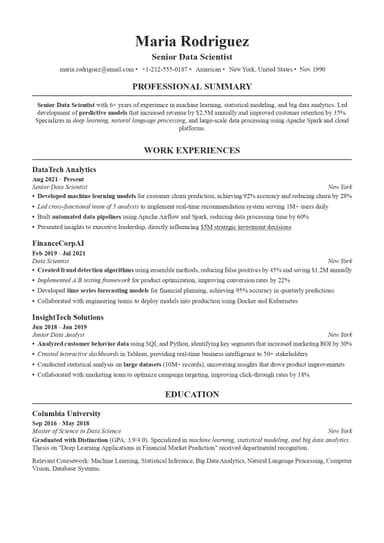
To showcase writing skills on your resume, you must use strong action verbs and specific achievements to show rather than just tell your competencies.
Besides a separate section dedicated to skills, you should focus on these in your experience section by highlighting writing-related accomplishments with concrete metrics. Include relevant writing experience, even if it wasn't your primary job responsibility. Additionally, volunteer work, side projects, or internal company contributions that involved significant writing should also be mentioned if they're relevant to your target position.
4 Common Writing Mistakes to Avoid
Some of the most common writing mistakes you can make include:
Industry jargon can be useful shorthand when communicating with knowledgeable colleagues, but it creates barriers when writing for broader audiences. The goal of professional writing is communication, not demonstrating vocabulary sophistication.
Choose simple, direct language whenever possible, and define technical terms when they're necessary. Your readers should focus on your message, not struggle to decode your word choices.
First and last impressions matter enormously in professional writing. Weak openings fail to engage readers or clearly establish your purpose, while ineffective conclusions leave readers wondering what they should do with the information you've provided.
Start with clear statements of purpose, interesting statistics, or compelling questions that draw readers into your content. End with specific calls to action, clear summaries, or thought-provoking questions that extend the conversation.
Professional writing should maintain a consistent tone and style throughout each document. Switching between formal and casual language, or between different organizational patterns, confuses readers and undermines your credibility.
Establish your tone early and maintain it consistently. If you're writing a formal report, keep the entire document formal; if you're crafting a friendly email, maintain that warmth throughout your message.
Even the most brilliant ideas lose impact when presented with obvious errors or unclear organization. Many professionals skip the crucial editing and proofreading phases, submitting work that doesn't represent their best thinking.
Always review your work multiple times, focusing on different elements during each pass. Check for big-picture issues like organization and clarity first, then move to sentence-level concerns, and finally catch technical errors like spelling and punctuation.
Make Your Writing Skills Shine in a Perfect Resume
If you’re ready to level up your career by making a solid resume that will emphasize your writing skills in the right way, we’ve got you.
With ResumeBuilder.so, you can effortlessly craft a polished, professional resume, tailored for any industry, in minutes. Browsing our extensive library of expert-designed resume examples will help you find inspiration, after which you can pick a clean, ATS-friendly template and customize it with your own personal details.
Therefore, be it tech, healthcare, education, or shifting careers entirely, we’ve got the tools to make you shine. Start building your standout application today and make every job opportunity count!
Final Thoughts
Writing skills represent one of the most valuable investments you can make in your professional development. Unlike technical skills that may become obsolete, strong communication abilities remain relevant throughout your career and actually become more important as you advance into leadership roles.
The digital workplace has made writing skills more crucial than ever, but it's also created more opportunities to practice and showcase these abilities. Every email, report, and social media post is a chance to reinforce your professional brand and demonstrate your communication competency.
Start improving your writing skills today; your future career success depends on your ability to communicate clearly and persuasively through written words. In return, the investment in developing these abilities will pay dividends throughout your entire professional journey.
Writing Skills FAQ

Daniel Carter is the salary negotiation coach you wish you had before accepting that lowball job offer. With years of HR experience, he knows all the employer tactics—and how to counter them. His posts break down negotiation strategies, industry salary trends, and scripts you can actually use in real conversations.