Transferable Skills Guide: Showcase Your Strengths in 2026


Transferable skills are the abilities you've picked up throughout your career that work anywhere—no matter your title or field. They're just as valuable in tech, finance, or education. The trick isn't having these skills—you already do. It's about identifying them and showing employers exactly how you'll bring that value to their team.
In this guide, you’ll learn what transferable skills are, their types, and the most valuable ones. Also, we’ll show you how to identify and highlight them on your resume. Let’s begin!
- Transferable skills are abilities that apply across multiple jobs, industries, and career paths.
- These include both soft skills like communication and leadership, plus hard skills such as data analysis and project management.
- Identifying your transferable skills is essential for career transitions and professional growth.
- Employers highly value candidates who can bring diverse skill sets to new roles because adaptability signals you'll succeed even when facing unexpected challenges.
What Are Transferable Skills?
Transferable skills are abilities and competencies you've developed throughout your career that can be applied to different jobs, industries, or roles. Unlike job-specific technical skills that only work in narrow contexts, these portable skills remain valuable regardless of your position or field.
For example, you've been managing restaurant operations—coordinating staff schedules, handling customer complaints, tracking inventory. Those same skills translate directly when you're applying for an office assistant position. The setting changes, but the core competencies stay put.
You can acquire transferable skills through various experiences, such as:
- Previous jobs
- Volunteer work
- Education
- Hobbies
- Family responsibilities
Today’s job market values adaptability and cross-functional abilities, which makes these skills more important than ever for employability. Career change has become a norm, with average American adults holding down an average of changing 12 jobs by the time they are 55. Each transition relies heavily on your ability to demonstrate relevant transferable skills that connect past experience to future potential.
Types of Transferable Skills
Transferable skills generally fall into two main categories:
- Soft skills. These are interpersonal abilities and personality traits that affect how you work with others and approach tasks. Employers value them because they're fundamental to workplace success.
- Hard skills. These are technical abilities and specialized knowledge that can be taught, measured, and applied across different contexts. While some hard skills are industry-specific, many transfer effectively between sectors when you frame them properly.
15 Most Valuable Transferable Skills
While all transferable skills matter, some consistently rank highest in employer demand and cross-industry applicability. Let’s see which abilities serve you well regardless of where your career takes you.
Clear communication proves universally important in any role, encompassing:
- Written abilities (emails, reports, documentation)
- Verbal skills (meetings, phone calls, presentations)
- Non-verbal cues
You use your communication skills when presenting to executives, drafting client proposals, coordinating with teammates, or explaining technical concepts to non-technical audiences. The context changes, but the core skill—conveying information effectively—remains fundamentally the same.
Leadership extends far beyond managing direct reports. It includes influencing others, taking initiative on projects, and guiding teams toward goals. You demonstrate leadership skills when you step up during a crisis, mentor a struggling colleague, or champion a new initiative.
These abilities transfer seamlessly from team lead roles to individual contributor positions where you're guiding peers, serving on cross-functional committees, or representing your department in broader discussions. Companies value leadership at every level because organizations need people who'll move things forward rather than just maintaining the status quo.
Problem-solving means identifying challenges, analyzing root causes, and implementing effective solutions. Every industry faces problems requiring analytical thinking and creative approaches—that's just reality. For instance, healthcare professionals solve patient care challenges, while marketers solve customer engagement problems.
Essentially, the methodology transfers even when the specific problems don't. Strong problem-solving skills are equally valuable in entry-level positions, where you're addressing daily operational issues, and executive roles, where you're solving strategic challenges.
Critical thinking involves objectively analyzing information to form judgments rather than accepting things at face value. You're evaluating sources, questioning assumptions, considering multiple perspectives, and drawing evidence-based conclusions.
This applies to decision-making at every level, strategy development, and evaluating complex situations across all professional contexts. Whether you're assessing vendor proposals, analyzing market trends, or determining the best approach to a technical challenge, critical thinking skills guide you toward sound decisions.
Working effectively with diverse groups remains essential regardless of industry or role. Work nowadays rarely happens in isolation—projects succeed through teamwork.
Of course, collaboration skills adapt to different workplace cultures, team sizes, and organizational structures. Someone who collaborates well in a startup environment can transfer those abilities to corporate settings, nonprofit organizations, or government agencies.
Prioritizing tasks, meeting deadlines, and managing multiple projects simultaneously increases productivity in any role. You might be juggling client requests, internal meetings, project deliverables, and professional development.
Effective time management means you're reliable, you deliver quality work on schedule, and you don't become a bottleneck. This skill proves equally valuable whether you're an administrative assistant coordinating executive calendars or a CEO managing strategic initiatives across multiple business units.
Adaptability means thriving amid change, learning new systems quickly, and pivoting strategies when circumstances shift. Its growing importance reflects our rapidly evolving industries and organizational changes. Companies merge, technologies advance, markets fluctuate, and strategies pivot.
Adaptable professionals don't just survive these transitions—they excel during them. You're learning new software, adjusting to reorganizations, embracing process changes, and staying effective despite uncertainty. That flexibility signals to employers you'll succeed even when facing unexpected challenges.
The fundamentals include planning initiatives, organizing resources, executing tasks, and delivering results on time and within budget. Project management skills apply whether you're managing formal projects with Gantt charts and status reports or coordinating team initiatives more informally.
Breaking complex work into manageable phases, tracking progress, identifying risks, and adjusting course when needed—these capabilities transfer across every industry and role level.
Gathering information, evaluating sources, and synthesizing findings support decision-making, strategic planning, and innovation across industries. You might be researching a company, market opportunities, investigating customer complaints, analyzing operational efficiency, or exploring new technologies.
The research process—defining questions, collecting data, assessing credibility, drawing conclusions—remains consistent even when the subject matter changes. Strong researchers add value by finding answers and insights others miss.
Creating clear, professional written content enhances communication effectiveness universally, from emails and reports to proposals and procedures. Poor writing creates confusion, wastes time, and damages professional credibility.
Strong writing skills clarify complex ideas, persuade stakeholders, document processes, and ensure knowledge transfer. Whether you're drafting marketing materials, technical documentation, or simple status updates, writing ability impacts how others perceive your professionalism and expertise.
Basic computer skills, software proficiency, and comfort with technology have become essential across all industries. Even traditionally non-technical fields like healthcare, education, and hospitality now rely heavily on digital tools.
However, technical literacy doesn't mean you need to code (though that helps). It means you learn new tools quickly, troubleshoot basic issues independently, and leverage technology to work more efficiently.
Understanding customer needs, managing expectations, and ensuring satisfaction applies beyond traditional customer-facing roles. You're serving internal stakeholders, external clients, vendors, partners, and end-users across sectors.
Customer service principles—active listening, empathy, responsiveness, problem resolution—transfer from retail to healthcare to B2B sales to internal support functions. Any role involves "customers" in some form, making this skill universally valuable.
Generating new ideas, approaching challenges uniquely, and driving innovation extend beyond traditionally creative fields like design or marketing. You apply creativity to process improvement, strategy development, problem-solving, and finding efficiencies.
Companies need people who question "we've always done it this way" and propose better approaches. Creative thinking helps whether you're developing new products, improving customer experiences, or finding cost savings in operations.
Maintaining systems, managing information, and keeping projects on track support efficiency and effectiveness in any professional setting. Disorganization creates chaos—missed deadlines, duplicated work, lost information, and stressed colleagues.
Strong organizational skills mean you establish processes, maintain documentation, track details, and ensure nothing falls through the cracks. This proves valuable from administrative roles to executive positions where you're organizing strategic initiatives.
Reaching agreements, finding win-win solutions, and managing competing interests happens constantly in professional settings. You negotiate salary, vendor contracts, project scope, resource allocation, stakeholder priorities, and team responsibilities.
Effective negotiators understand interests beyond stated positions, build relationships, create options for mutual gain, and reach sustainable agreements. These skills transfer from sales to procurement, management, consulting, and virtually any role involving multiple parties with different needs.
How to Identify Your Transferable Skills
Identifying your own transferable skills requires some intentional reflection and analysis. Most people underestimate what they bring to the table because they take their abilities for granted. Here’s a quick step-by-step process to help you identify your own skill set:
- Review your work history. Examine past positions, but look beyond job titles to identify actual skills used. Break it down, e.g., managed high-pressure situations, resolved customer complaints, coordinated with kitchen staff, handled cash transactions, and memorized complex information quickly.
- Analyze your achievements. List professional accomplishments and identify which skills made them possible. Your achievements provide concrete evidence of transferable skills in action.
- Consider volunteer and extracurricular activities. Non-work activities develop valuable professional skills that many people overlook. These experiences count—they demonstrate real-world application of transferable skills. Don't dismiss them just because you weren't paid.
- Ask for feedback. Request input from colleagues, managers, and mentors about your strengths. External perspectives reveal blind spots in your self-assessment and identify transferable skills you might not claim otherwise.
How to Showcase Transferable Skills on Your Resume
Identifying skills matters little if you can't communicate them effectively to potential employers. The key lies in demonstrating rather than just listing these abilities. That said, let’s see how you can showcase your transferable skills when writing a resume.
#1. Include a Skills Section
Create a dedicated skills section that prominently displays your most relevant transferable abilities. Organize skills for your resume either by category—technical, interpersonal, analytical—or by relevance to the target position.
This section should appear near the top, where recruiters will definitely see it. However, don't just list skills without context or proof. A skills section that simply says "Communication, Leadership, Problem-solving" tells employers nothing meaningful. You need the work experience to back up these claims with concrete examples.
#2. Integrate Skills Into Your Work Experience
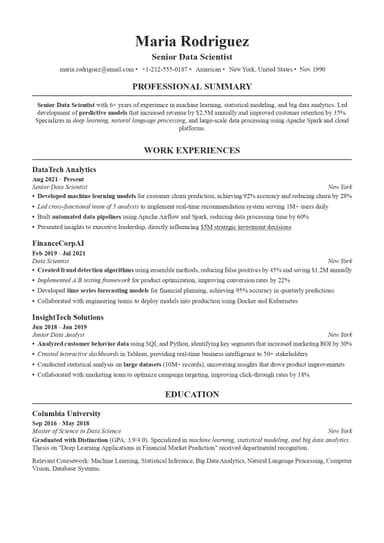
Weave transferable skills naturally into bullet points describing work experience. Show don't tell—that's the golden rule. Aim for this format: action verb + specific task + transferable skill demonstrated + result.
Here’s a good example:
- Presented quarterly performance reports to C-suite executives, translating technical data into actionable business insights that informed strategic planning.
This way, you're demonstrating communication, analytical thinking, and business acumen all at once through a specific achievement with quantifiable context.
#3. Use the STAR Method
The STAR method helps you describe achievements that showcase transferable skills effectively in your cover letter or at the interview. Set up the context (situation), explain what needed to be done (task), detail what you did (action), and share the outcome (result).
Here's a quick example:
When customer satisfaction scores dropped 20% (situation), I was tasked with improving service quality (task). I implemented a new training program and feedback system (action), which increased satisfaction scores to 95% within three months (result).
This approach demonstrates problem-solving, initiative, training abilities, and results orientation through one concrete scenario.
#4. Tailor Skills to Each Application
Customize which transferable skills you emphasize based on the target job description. Analyze job postings carefully to identify which skills employers value most, then highlight those in your resume and cover letter.
If a marketing role emphasizes "data-driven decision making," make sure your resume prominently features analytical skills with examples. If leadership appears repeatedly in the job description, emphasize times you led initiatives, mentored others, or influenced outcomes.
Generic resumes rarely succeed—targeted applications that speak directly to employer needs perform significantly better.
How to Develop New Transferable Skills
There are several strategies you can use to develop transferable skills, including:
- Online courses. Platforms like LinkedIn Learning, Coursera, and Udemy offer accessible skill development in virtually any area. Focus on in-demand skills like data analysis, project management, digital marketing, or programming fundamentals. When you list certifications on your resume, you're showing employers concrete evidence of ongoing professional development.
- Stretch assignments. Volunteer for projects outside your comfort zone that develop new capabilities. Cross-functional initiatives expose you to different aspects of the business. Leadership opportunities—even informal ones like leading a small project team—build management skills. Challenging assignments accelerate skill growth because they push you beyond routine responsibilities.
- Mentorship. Seek mentors who excel in areas you want to develop, whether that's executive presence, technical expertise, or strategic thinking. Good mentors share both successes and failures, helping you learn from their experiences. They also often provide networking opportunities and advocate for your advancement.
- Deliberate practice. Transferable skills improve with intentional practice and reflection rather than passive repetition. Actively seek opportunities to use developing skills, then analyze what worked and what didn't. After presentations, ask yourself what went well and what you'd change next time. Following negotiations, consider which strategies proved effective.
Ready to Showcase Your Transferable Skills Effectively?
Our resume builder helps you identify and highlight your strongest capabilities with AI-powered suggestions and ATS-optimized formatting. Choose from professionally designed resume templates built to emphasize transferable skills, making career transitions smoother and advancement opportunities more achievable.
Whether you’re switching industries or aiming for your next promotion, ResumeBuilder.so gives you the tools to present your experience clearly, confidently, and competitively in today’s job market.
Final Thoughts
Transferable skills represent your most valuable professional assets because they provide flexibility, resilience, and opportunity throughout your career. Whether you're pursuing a career change, seeking advancement, or entering the job market fresh, these portable abilities demonstrate your potential to succeed in new contexts.
Everyone possesses more transferable skills than they initially recognize. The real work lies in identifying them accurately, developing them intentionally, and communicating them effectively to potential employers. Invest time in this process because clearly articulated transferable skills significantly strengthen job applications and open new career possibilities.
However, don't just list generic skills on your resume. Show employers exactly how you've applied these abilities to achieve meaningful results. Connect your past experiences to future roles explicitly. Make it easy for hiring managers to see why you'll succeed in their organization.
Transferable Skills FAQs

Daniel Carter is the salary negotiation coach you wish you had before accepting that lowball job offer. With years of HR experience, he knows all the employer tactics—and how to counter them. His posts break down negotiation strategies, industry salary trends, and scripts you can actually use in real conversations.