Technical Skills for Your Resume: Complete Guide + Examples

Technical skills have become the currency of the modern job market. If your resume doesn't clearly show you've got them, you're fighting an uphill battle before anyone even picks up the phone. Recruiters spend roughly seven seconds scanning your resume. However, which technical skills should you list on your resume?
In this guide, we’ll walk you through everything you need to know about technical skills—what they are, why employers care, and how to showcase them effectively on your resume. We'll cover 15 categories with over 100 examples, show you how to identify your skills, and help you avoid the mistakes that tank otherwise solid applications.
- Technical skills are measurable, job-specific abilities—such as software proficiency, programming, analytics, and equipment operation—that employers can easily test and verify.
- As digital transformation accelerates, technical skills are now essential across nearly all professions, with employers prioritizing candidates who can use modern tools, platforms, and technologies.
- There are several major categories of technical skills—including programming, analytics, digital marketing, design, project management, engineering, healthcare, cybersecurity, and more—each with industry-relevant tools and software.
- Identifying your technical skills requires honest self-assessment, analyzing job descriptions, and conducting a skills-gap analysis to understand what the market demands versus what you currently offer.
- To showcase technical skills effectively, integrate them into both a structured skills section and quantified work experience bullet points that demonstrate real-world application and impact.
What Are Technical Skills?
Technical skills are the hard, measurable abilities you develop through education, training, or hands-on experience that allow you to perform specific job-related tasks. Unlike soft skills (communication, teamwork, leadership), technical skills are concrete and testable.
These skills typically fall into a few categories, such as software proficiency, technical knowledge, analytical abilities, and specialized tools or methodologies. A marketing manager needs Google Analytics, SEO platforms, and marketing automation software. An engineer needs CAD programs and equipment operation knowledge. Even teachers now need learning management systems, and sales professionals need CRM platforms.
The good thing is that technical skills are learnable. You develop these competencies through deliberate practice, which means there's always room to expand your capabilities and make yourself more valuable.
Technical Skills vs. Soft Skills
Understanding the distinction helps you write your resume effectively. So, let's clear up the confusion between technical skills and soft skills:
| Type | Characteristics | Example |
|---|---|---|
Technical Skills |
|
|
Soft Skills |
|
|
Why Technical Skills Matter in 2025
The workplace has fundamentally changed. According to the World Economic Forum's Future of Jobs Report, workers can expect that 39% of their existing skillset will be transformed or become outdated by 2030, with technology-related skills becoming baseline across nearly all professions.
This shift is driven by automation, artificial intelligence, and digital transformation, which have made technical proficiency essential even in traditionally non-technical roles. Administrative assistants now manage cloud-based workflows. Sales teams need data analytics to track performance. Even retail workers use inventory management software that would've seemed futuristic a decade ago.
Looking at the data from the U.S. Bureau of Labor Statistics, the fastest-growing industries in the next decade almost universally require higher levels of technical skills than their predecessors. Therefore, if you're not building technical skills, you're not building your career—you're slowly becoming obsolete in a market that moves faster every year.
15 Categories of Technical Skills With Examples
Let's get into the specifics—the actual technical skills to put on resume that employers are searching for right now.
#1. Computer and Software Skills
Computer and software skills form the foundation of technical competency in virtually every modern workplace. These capabilities enable you to handle daily tasks, collaborate with teams, and manage information effectively across distributed work environments. From basic document creation to complex data analysis, computer proficiency is non-negotiable in today's job market.
Here are the essential software and computer skills employers seek:
- Microsoft Office Suite: Word, Excel (functions, pivot tables, formulas), PowerPoint, Outlook
- Google Workspace: Docs, Sheets, Slides, Gmail, Drive
- Collaboration Platforms: Slack, Microsoft Teams, Zoom
- Project Management Tools: Asana, Trello, Monday.com
- Cloud Storage Systems: Dropbox, Google Drive, OneDrive, SharePoint
#2. Programming and Development Skills
Programming languages have transcended the IT department—they're valuable across marketing, finance, operations, and creative roles. Learning to code opens doors to automation, data analysis, and problem-solving capabilities that make you indispensable. Even basic programming knowledge can increase your efficiency and career prospects.
Here are the key programming and development skills:
- Programming Languages: Python, JavaScript, Java, C++, Ruby, PHP
- Web Frameworks: React, Angular, Vue.js, Node.js
- Database Languages: SQL (MySQL, PostgreSQL, Oracle)
- Version Control: Git, GitHub, GitLab, Bitbucket
- Development Tools: Visual Studio Code, Eclipse, IntelliJ IDEA
#3. Data Analysis and Analytics
Data analysis skills have become essential across nearly every function, from marketing to operations. AI adoption in the workplace is rising, increasing the need for data literacy and analytics skills across occupations as organizations seek evidence-based decisions.
Here are the critical data analysis and analytics skills:
- Spreadsheet Software: Microsoft Excel (pivot tables, VLOOKUP, macros), Google Sheets
- Database Query: SQL, NoSQL databases
- Data Visualization: Tableau, Power BI, Google Data Studio
- Analytics Platforms: Google Analytics, Adobe Analytics, Mixpanel
- Statistical Software: R, Python (Pandas, NumPy), SPSS, SAS
#4. Digital Marketing Skills
Digital marketing has evolved from a specialized niche to a fundamental business function across organizations of all sizes. These technical skills let you reach audiences, measure campaign performance, and optimize marketing efforts based on data. Modern marketers must balance creativity with technical execution to drive results.
Here are the essential digital marketing skills:
- SEO Tools: SEMrush, Ahrefs, Moz, Google Search Console
- SEM Platforms: Google Ads, Facebook Ads Manager, LinkedIn Campaign Manager
- Social Media Management: Hootsuite, Buffer, Sprout Social
- Email Marketing: Mailchimp, Constant Contact, HubSpot, Klaviyo
- Content Management Systems: WordPress, Drupal, Webflow, Shopify
- Marketing Automation: HubSpot, Marketo, Pardot
- Analytics: Google Analytics, Google Tag Manager
#5. Design and Creative Skills
Creative roles, such as graphic design, increasingly require technical execution capabilities to bring artistic visions to life. These tools let you design everything from logos to websites to video content professionally. Technical proficiency with design software amplifies creative talent rather than constraining it.
Here are the key creative and design skills:
- Adobe Creative Suite: Photoshop, Illustrator, InDesign, Premiere Pro, After Effects
- Alternative Design Tools: Canva, Figma, Sketch, Affinity Designer
- Web Design Platforms: Webflow, Squarespace, Wix
- UX/UI Design: Figma, Adobe XD, InVision, Balsamiq
- 3D Design: Blender, Cinema 4D, SketchUp
- Video Editing: Final Cut Pro, DaVinci Resolve, Camtasia
#6. Project Management Skills
Project management has become increasingly technical as teams grow more distributed and projects more complex. These tools help you plan, execute, and monitor initiatives while keeping stakeholders informed. Project managers nowadays must master both methodology and technology to deliver results on time and within budget.
Here are the essential project management skills:
- Project Management Software: Asana, Trello, Monday.com, Jira, Basecamp, Microsoft Project
- Agile Tools: Scrum frameworks, Kanban boards, burndown charts
- Resource Planning: Smartsheet, Resource Guru, Float
- Time Tracking: Harvest, Toggl, Clockify
- Documentation: Confluence, Notion, SharePoint
- Gantt Charts: Microsoft Project, TeamGantt
#7. Engineering Skills
Engineering disciplines demand specialized technical skills that combine theoretical knowledge with practical application. These skills enable you to design, test, and refine solutions before physical production. For instance, CAD proficiency and simulation capabilities are fundamental for engineers across all specializations.
Here are the critical engineering skills:
- CAD Software: AutoCAD, SolidWorks, CATIA, Revit, SketchUp
- Simulation Tools: ANSYS, MATLAB, Simulink, COMSOL
- Manufacturing: CNC programming, PLC programming, 3D printing
- Quality Control: CMM operation, statistical process control
- Technical Drawing: GD&T, blueprint reading
- Engineering Software: LabVIEW, PTC Creo, Siemens NX
#8. Healthcare Technical Skills
Healthcare has undergone massive digital transformation, making technical proficiency essential for clinical excellence. These systems improve patient care, streamline operations, and ensure regulatory compliance. Medical professionals must now master both clinical expertise and healthcare technology.
Here are the essential healthcare technical skills:
- EMR Systems: Epic, Cerner, Meditech, Allscripts
- Medical Equipment: MRI, CT, ultrasound, diagnostic imaging
- Laboratory Equipment: Centrifuges, spectrophotometers, PCR machines
- Telehealth Platforms: Zoom for Healthcare, Doxy.me, Teladoc
- Healthcare Analytics: Tableau Healthcare, QlikView
- Medical Coding: ICD-10, CPT, HCPCS
- HIPAA Compliance Tools: Encryption software, secure messaging
The intersection of medical expertise and technical competency creates the most valuable healthcare professionals.
#9. Financial and Accounting Skills
Financial experts and accountants require sophisticated technical tools to manage complex data and ensure accuracy. These platforms handle everything from daily bookkeeping to strategic financial planning. Modern finance professionals must combine domain expertise with strong technical execution.
Here are the key financial and accounting skills:
- Accounting Software: QuickBooks, Xero, FreshBooks, Wave
- Enterprise Systems: SAP, Oracle Financials, NetSuite
- Financial Modeling: Advanced Excel (DCF, three-statement models)
- ERP Systems: Microsoft Dynamics, Workday, Sage Intacct
- Tax Software: ProSeries, Lacerte, UltraTax, Drake
- Banking Platforms: Bloomberg Terminal, Reuters Eikon
- Financial Analysis: Power BI, Tableau, SQL
#10. Sales and CRM Skills
Sales has become increasingly data-driven, requiring technical tools to manage relationships and analyze performance at scale. CRM platforms have transformed how sales teams operate, track pipelines, and forecast revenue. The best sales resume combines interpersonal skills with technical capabilities.
Here are the essential CRM and sales skills:
- CRM Platforms: Salesforce, HubSpot, Zoho CRM, Pipedrive
- Sales Intelligence: LinkedIn Sales Navigator, ZoomInfo, Hunter.io
- Proposal Software: PandaDoc, Proposify, DocuSign
- E-commerce: Shopify, WooCommerce, Magento, BigCommerce
- Sales Analytics: Tableau, Power BI, Domo
- Communication Tools: Outreach, SalesLoft, Gong
- Video Conferencing: Zoom, Microsoft Teams, Google Meet
#11. Manufacturing and Production Skills
Manufacturing requires hands-on technical skills combined with knowledge of sophisticated production systems. These capabilities ensure quality, efficiency, and safety in production environments. Modern manufacturing integrates traditional machinery operation with digital systems and continuous improvement methodologies.
Here are the critical manufacturing and production skills:
- Machinery Operation: CNC machines, lathes, mills, presses
- Quality Systems: CMM, SPC software, Six Sigma tools
- Inventory Management: SAP, Oracle, Plex, Epicor
- Lean Manufacturing: Value stream mapping, Kaizen, 5S
- Production Planning: MES (Manufacturing Execution Systems)
- Robotics: Industrial robot programming and maintenance
- Statistical Tools: Minitab, JMP
#12. Research and Scientific Skills
Research roles, such as research assistants, require specialized technical skills for data collection, analysis, and documentation. Laboratory equipment proficiency forms the foundation, while statistical software enables rigorous analysis. These competencies ensure research validity, reproducibility, and contribution to scientific knowledge.
Here are the essential research and scientific skills:
- Laboratory Equipment: Spectrophotometers, chromatography (HPLC, GC-MS), PCR machines
- Statistical Software: SPSS, SAS, R, STATA, Python
- Data Collection: REDCap, Qualtrics, SurveyMonkey
- Analysis Tools: NVivo, MATLAB, ImageJ, GraphPad Prism
- Geographic Analysis: ArcGIS, QGIS
- Reference Management: Zotero, Mendeley, EndNote
- Scientific Computing: Python (SciPy, NumPy), MATLAB
#13. Education and Training Skills
Education technology has transformed how teachers deliver instruction and assess learning. These platforms enable personalized learning, track student progress, and facilitate communication with families. Modern educators must balance pedagogical expertise with technical competency.
Here are the key education and training skills:
- Learning Management Systems: Canvas, Blackboard, Moodle, Google Classroom
- Interactive Tools: Kahoot, Nearpod, Flipgrid, Padlet
- Video Conferencing: Zoom, Microsoft Teams, Google Meet
- Assessment Tools: Turnitin, GradeScope, ExamSoft
- Content Creation: Camtasia, Articulate, Adobe Captivate
- Student Information Systems: PowerSchool, Infinite Campus
- Educational Apps: ClassDojo, Seesaw, Remind
However, video conferencing platforms require more than basic video calling—educators need to manage breakout rooms, screen sharing, and engagement features.
#14. Cybersecurity Skills
Cybersecurity has exploded in importance as threats have multiplied and consequences have escalated. According to Global Cybersecurity Outlook 2025, 72% of organizations reported a rise in cyber risks, reflecting the increasing threat landscape. These technical skills protect organizations from constantly evolving risks.
Here are the essential cybersecurity skills:
- Security Software: Antivirus platforms, firewalls, IDS/IPS
- Network Analysis: Wireshark, tcpdump, Nmap
- SIEM Platforms: Splunk, QRadar, ArcSight, LogRhythm
- Penetration Testing: Metasploit, Burp Suite, Nessus, Kali Linux
- Cloud Security: AWS Security, Azure Security Center, Google Cloud Security
- Encryption: SSL/TLS, PGP, VPNs
- Compliance: NIST, ISO 27001, PCI DSS, SOC 2
#15. Industry-Specific Technical Skills
Beyond these broad categories, specialized industries have unique technical requirements that don't fit elsewhere. These niche skills often command premium salaries because they're less common. Research your target field to understand which specific competencies employers value most.
Here are examples of industry-specific technical skills:
- Legal: Westlaw, LexisNexis, Clio, MyCase, e-discovery tools
- Real Estate: MLS databases, kvCORE, BoomTown, Matterport
- Supply Chain: WMS (Warehouse Management Systems), TMS (Transportation Management)
- Architecture: Revit, Rhino, Lumion, V-Ray
- Hospitality: Opera PMS, Micros POS, OpenTable
- Construction: Procore, Bluebeam, BIM 360
- Agriculture: Precision farming software, GPS guidance systems
How to Identify Your Technical Skills
Identifying which technical skills you possess requires systematic self-assessment, and here’s the best way to do it:
- Start by inventorying your actual experience. Don't just list software you've used once—focus on tools where you can legitimately claim proficiency. Ask yourself: Could I teach someone else? Could I troubleshoot problems independently?
- Review your work history systematically. For each position, identify every technical tool, software platform, system, or methodology you use regularly. Check certifications and training you've completed. Look at your educational background beyond just your degree—what software did you learn in coursework?
- Consider transferable skills from hobbies and volunteer work. Built websites for a nonprofit? That's web development experience. Managed social media for a community group? Digital marketing skills. Technical skills don't only develop in paid positions.
Conduct a Skills Gap Analysis
Once you know your current skills, compare them against job market demands. Collect 10-15 job postings for your target position and create a spreadsheet tracking every technical skill mentioned.
Compare your current capabilities against these market demands. Create three categories:
- Skills you have that the market wants (leverage heavily)
- Skills market wants that you lack (prioritize for development)
- Skills you have that the market doesn't emphasize (consider de-emphasizing)
How to Showcase Technical Skills on Your Resume
Having technical skills matters little if recruiters can't quickly identify them. Let's cover strategic presentation approaches.
Skills Section Best Practices
Your skills section should appear prominently—typically right after your professional summary. This placement ensures ATS systems catch keywords early while giving human reviewers immediate visibility.
Organize skills logically by category and use exact terminology from job postings. If the posting says "JavaScript" but you list "JS," ATS systems might not make the connection. Include proficiency levels when appropriate: "Python (Advanced)," "SQL (Intermediate)."
However, don't list every tool you've barely touched. Overstatement often backfires in interviews when you can't demonstrate claimed capabilities.
Integrating Skills in Work Experience
The skills section identifies what you can do—your work experience section proves you've actually done it. Here’s how to do it properly:
- Start each bullet point with a strong action verb. These verbs should imply technical application: "Developed," "Implemented," "Automated," "Analyzed."
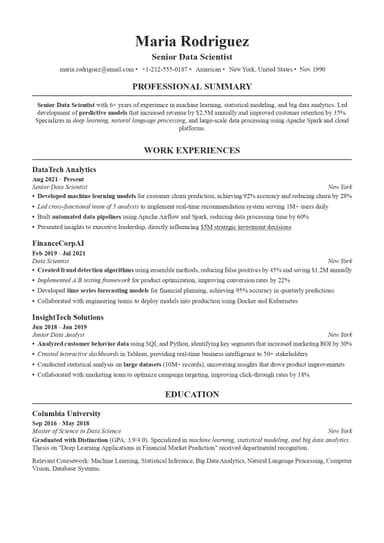
- Name specific tools in your accomplishment statements. Instead of "Improved reporting processes," write "Automated reporting workflows using Python and SQL, reducing manual effort by 15 hours weekly." The technical skills become inseparable from the achievement.
- Quantify results wherever possible. "Managed social media" is weak. "Grew Instagram following by 240% over six months using Hootsuite scheduling and analytics" demonstrates both technical proficiency and business impact.
Common Mistakes to Avoid When Presenting Your Technical Skills
Even strong technical skills lose impact when poorly presented. Keep in mind the following common mistakes:
| Mistake | Explanation | Bad Example | Good Example |
|---|---|---|---|
Overstating Your Abilities | Claiming skills you don’t actually have leads to failed interviews or assessments. Be honest about your real proficiency. | "Advanced Python" (but only watched a few tutorials) | "Basic Python (building small scripts; currently improving)" |
Using Outdated Skills | Listing obsolete tools signals you're not up to date. Remove deprecated tech and refresh your list regularly. | "Flash, AngularJS 1.0, Windows XP Admin" | "React, Python 3, Docker, SQL" |
Poor Organization and Presentation | Large, unstructured lists overwhelm readers. Curate only relevant skills and format cleanly. | "Python, Java, Excel, HTML, Jira, Photoshop, C++, SAP, Azure…" (50+ skills in random order) | "Technical Skills: Python, SQL, Tableau, Azure (relevant to data roles)" |
Showcase Your Technical Skills Professionally With ResumeBuilder.so
ResumeBuilder.so streamlines the entire resume writing process. Our intuitive resume builder guides you through each section, ensuring your technical competencies are prominently displayed and properly formatted for both ATS systems and human reviewers.
You can choose from multiple professionally designed resume templates optimized for various industries and technical roles—from software engineers to digital marketers to healthcare professionals. For inspiration, browse our library of resume examples. Each example demonstrates proper organization, keyword optimization, and achievement-focused formatting that gets results.
Final Thoughts
Technical skills aren't optional extras on modern resumes—they're baseline requirements that separate viable candidates from those who don't make the cut. However, the ones in demand today won't be the same ones driving hiring decisions five years from now. What remains constant is the need for professionals who can adapt, learn new systems, and apply technical capabilities to solve real problems.
Start by honestly assessing where you are now. Compare your technical competencies against market demands for your target roles and identify gaps worth filling. Then build a development plan that works for your situation—online courses, certifications, hands-on projects, whatever combination fits your schedule.
Update your resume to showcase technical skills effectively, integrating them throughout your work experience while maintaining a scannable skills section. Customize for each application, emphasizing the competencies most relevant to each role.
Technical Skills FAQ

Jordan Lee is your guide to navigating the rapidly changing job market in the age of AI and automation. He dives into how AI is reshaping hiring, the skills of the future, and what job seekers need to do now to stay relevant. If you’re curious about how technology is transforming careers and want to future-proof your job, Jordan’s insights are a must-follow.