How to Start a Cover Letter: 8 Proven Opening Lines + Examples

You can start a cover letter by addressing the hiring manager by name, stating the role you're applying for, and opening with a hook that immediately highlights your value. However, this is, for most people, the hardest part of the whole application. Hiring managers screen dozens of applications for a single role, and a weak opening practically begs them to move on. That’s why the first sentence matters.
In this guide, we break down exactly how to start a cover letter for a job: from choosing the right greeting to crafting a first paragraph that makes them want to keep reading. Also, you'll also find eight real opening line examples, common mistakes to avoid, and advice for specific situations like career changes and applying with no experience.
- Always address the hiring manager by name when possible—it signals effort and attention to detail.
- Avoid weak openers like "I am applying for…" and lead with your value instead.
- Your first sentence should hook the reader with a specific achievement, connection, or company insight.
- A strong cover letter greeting combined with a compelling first paragraph is what turns applications into interviews.
- The right opening varies by career stage—no experience, career change, internal positions, and post-gap applications each need a different approach.
What Is a Cover Letter?
A cover letter is a one-page document that accompanies your resume. It lets you explain, in your own voice, why you're the right fit for a role. Therefore, a good cover letter is your chance to add context, personality, and specificity that a resume simply can't.
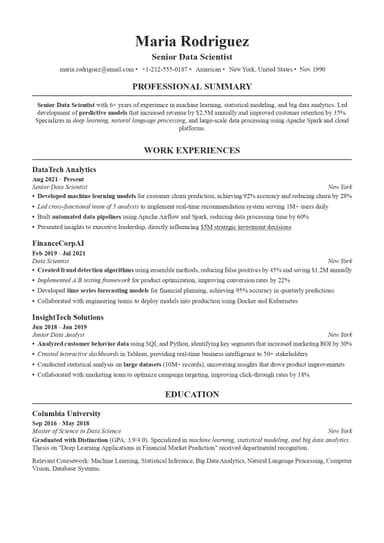
That said, here’s a good cover letter example that you can use as inspiration for your own cover letter writing:

Why Does the Cover Letter Opening Matter?
Cover letter opening matters for several reasons, for example:
- It creates a critical first impression. Hiring managers review dozens of applications quickly, and your opening lines determine whether they keep reading or move on entirely.
- It sets you apart from generic applicants. Most cover letters begin with tired phrases like "I am writing to apply for..." A strong, specific opener immediately signals that you've put real thought into your application.
- It establishes your writing skills. How you open reveals how you write, think, and present yourself — qualities employers are actively evaluating before you've even stepped into an interview.
For instance, according to a study by Wingate et al., applicants who wrote with greater detail, clarity, and structure saw real, measurable results in their job search. In fact, improving the overall quality of application documents by just one point on a writing scale was linked to 7% more interview callbacks and securing a job nearly 10 days sooner.
That's the difference a well-crafted cover letter opening can make before a hiring manager even reaches your work experience.
How to Choose the Right Cover Letter Greeting
The choice of the right cover letter greeting depends on the scenario. The table below outlines a few specific scenarios and recommended greetings based on them:
| Scenario | Recommended Greeting | What to Avoid |
|---|---|---|
You know the name | Dear [First Name Last Name] | — |
Formal industry / unsure | Dear Mr./Ms. [Last Name] | Dear Sir or Madam |
Name unknown | Dear Hiring Manager | To Whom It May Concern |
Addressing a team | Dear [Department] Team | Dear Sir or Madam |
How to Write the First Paragraph of a Cover Letter
Writing the first paragraph of a cover letter is all about structure. The first paragraph needs to answer three questions almost simultaneously:
- Who are you?
- What role are you after?
- Why should they care?
Here’s how to achieve this in three simple steps:
- State the position you're applying for. Mention the job title and, briefly, where you saw the listing. This is context-setting, so keep it to one sentence maximum.
- Lead with your strongest qualifier. Instead of describing yourself generically, lead with a specific achievement, a mutual connection, or a statement that shows you've thought carefully about why this company and this role.
- Show you know the company. One targeted sentence referencing something specific — a product launch, a recent award, a company value — signals that you've researched the company and aren't mass-applying.
With these steps in mind, let’s take a look at weak vs. strong cover letter opening examples:
After leading a 40% increase in organic traffic at my last company, I'm eager to bring that momentum to the Marketing Manager role at Acme Corp.
In my last role, I closed $1.2M in new business in nine months — and I'd love to replicate that for the Sales Director position at TechCo.
Dear Ms. Rivera, Your team's recent launch of the GreenPath initiative is exactly the kind of work I've spent six years building toward.
Weak Opening
I am writing to apply for the Marketing Manager position.
I have experience in sales and am a good communicator.
To Whom It May Concern, I am applying for the role.
8 Attention-Grabbing Cover Letter Opening Lines
Here are eight real-world examples with a breakdown of why each one works—and when to use it.
#1. The Achievement Opener
Lead with a specific, quantified result from your career. Numbers create immediate credibility. For example:
In my last role, I reduced customer churn by 23% in one year — and I'd love to bring that results-driven approach to [Company].
#2. The Mutual Connection Opener
If a current employee or mutual contact referred you, lead with that. It immediately sidesteps the cold-application dynamic. For example:
[Mutual Contact's Name] suggested I reach out — she thought my background in supply chain optimization would be a strong fit for your Operations Lead role.
#3. The Passion-Driven Opener
Best for mission-driven organizations, nonprofits, or creative roles. Lead with genuine enthusiasm, but back it with something specific. For example:
I've followed [Company]'s work in renewable energy education since your 2021 curriculum launch, and this Program Manager role feels like the natural next step in the work I've been building toward.
#4. The Problem-Solution Opener
Reference a challenge the company is facing and emphasize your problem-solving skills for that specific challenge. This requires research, but it's one of the most memorable openers you can write.
Here’s a good example:
With [Company] expanding into three new markets this year, scaling a distributed sales team will be one of your biggest challenges — and it's exactly what I spent the last four years doing at [Previous Company].
#5. The Storytelling Opener
A brief, compelling anecdote that connects to your skills and qualifications. This kind of cover letter opening is best for communications, marketing, and writing roles where storytelling is part of the job.
This is how you can phrase it:
The day my article on supply chain disruptions ran in the Wall Street Journal, the editor told me it was the clearest explanation of a complex topic she'd seen in years. That's the kind of clarity I want to bring to your Content Strategist role.
#6. The Skills-Forward Opener
Lead with a hard skill and immediately back it with proof. This one works especially well in technical fields where credentials carry the most weight.
Let’s see a good example you can use for inspiration:
I've spent six years building and maintaining Python-based data pipelines for Fortune 500 clients — and your Senior Data Engineer role looks like the most interesting challenge I've seen in my field.
#7. The Research-Based Opener
Reference something specific about the company—a news story, award, product, or campaign—and connect it directly to your application. For example:
When I read about [Company]'s recent B Corp certification, I immediately thought of my work at [Previous Company], where I led the sustainability reporting that helped us achieve the same designation.
#8. The Direct Value Statement Opener
Clean, confident, and instantly clear. A great fit when you want to skip the storytelling and just land the punch.
Here’s a good example of this cover letter opening:
I help SaaS companies cut support ticket volume by 30–40% through smarter onboarding design — which is exactly what drew me to the Customer Success Lead role at [Company].
How to Start a Cover Letter Depending on Your Career Level
There's no universal opener that works for everyone because the right cover letter introduction depends heavily on where you are in your career. Let’s explore how to approach the most common scenarios.
#1. How to Start a Cover Letter With No Experience
If you're a recent graduate or making your first entry into the workforce, focus on transferable skills, relevant coursework, extracurriculars, or a genuine connection to the company's mission.
Enthusiasm backed by specificity still makes an impression. For example:
As a recent marketing graduate who built and managed social media accounts for three campus organizations — growing combined reach by 12,000 followers — I'm excited to bring that hands-on experience to the Marketing Coordinator role at [Company].
#2. How to Start a Career Change Cover Letter
Lead with the skills and experience that transfer directly, and briefly acknowledge the change later in the letter. Your opener should be confident, not defensive.
Here’s a good example:
Ten years running high-stakes client projects in consulting taught me the same skills your UX Lead role demands — stakeholder management, rapid iteration, and translating complex user needs into clear decisions.
#3. How to Start a Cover Letter for an Internal Position
Lean into your insider advantage. Reference your existing knowledge of the company, your proven track record, and your relationships with the team.
You've earned credibility that external candidates don't have—use it. For example:
After three years on the customer success team at [Company], I've watched our enterprise segment grow rapidly — and I believe I'm the right person to help lead that next phase as the Enterprise Account Manager.
#4. How to Start a Cover Letter After an Employment Gap
Don't lead with your employment gap. Lead with your qualifications and what you bring to the table right now. The gap can be acknowledged briefly and honestly later in the letter.
Starting with an apology or explanation signals that you see it as a problem; if you don't treat it as one, neither will the hiring manager.
Common Mistakes to Avoid When Starting a Cover Letter
Even strong candidates make avoidable cover letter mistakes in their openings. The table below outlines the five most common ones and how to sidestep them:
| Mistake | What Goes Wrong | How to Fix It |
|---|---|---|
Starting With "I" | Centers the narrative on you rather than the value you bring, putting the focus in the wrong place from the first word. | Reframe the opening around the role or company. Instead of "I am applying for..." try leading with what drew you to the position specifically. |
Restating Your Resume | The opening becomes a bullet-point summary of experience the hiring manager can already see. | Use the opening to add narrative, context, or specificity that your resume can't. Give them a reason the resume exists. |
Using a Generic Template | Copy-pasted openers are obvious by the second sentence and signal low effort or mass-applying. | Include the company name, specific role, and at least one detail unique to this opportunity. |
Including Irrelevant Information | Unrelated hobbies, GPA disclaimers, or lengthy backstories distract from your fit for the role. | Stay focused on what you bring to this specific position. Cut anything that doesn't directly support your candidacy. |
Wrong Tone | A cover letter that's too stiff for a startup or too casual for a law firm signals poor cultural awareness. | Research the company's voice through their website, job posting, and social media; then write to match their register. |
Start Your Cover Letter Strongly With ResumeBuilder.so
Writing a cover letter from scratch is tough. Writing a strong opening line, i.e. one that's personalized, specific, and compelling, is even harder.
However, with ResumeBuilder.so's AI-powered cover letter builder, you’ll be able to do it in minutes. Just enter your target job title, the company name, and a few details about your background.
Also, you can browse multiple professional cover letter templates and cover letter examples to see the full range of styles available.
Whether you're writing your cover letter from scratch or optimizing your existing one, ResumeBuilder.so speeds up the entire process.
Final Thoughts
Starting a cover letter well isn't about being clever or flashy, it's about being specific, confident, and relevant to the role in front of you. The formula is simple: address the right person, open with something that actually shows your value, and prove you've done your research on the company.
Also, make sure your resume is just as strong as your cover letter. The two documents work together, and a great cover letter paired with a weak resume, or vice versa, is a missed opportunity.
How to Start a Cover Letter FAQs

Emily Foster knows how nerve-wracking it can be to land your first job—she’s been there. As a mentor for young professionals, she shares exactly what hiring managers want from entry-level candidates. From internship hacks to interview confidence tips, Emily helps students and recent grads navigate the job search with ease.